Hybrid events in Mallorca: sound, cameras and streaming
A hybrid event has two audiences, and the one outside only gets what goes through the microphones and cameras. What we keep in mind so the signal reaches them properly.
A hybrid event has two audiences: the people in the room and the people following from home or the office. The first group gets everything. The second only gets what the microphones and cameras pick up. That is why, when we prepare hybrid events in Mallorca, the vision mixing and the sound matter as much as the stage.
We film congresses, conferences, conventions and live shows with multiple cameras, and we take care of the planning, filming, video production and publishing or live streaming. This is what we pay most attention to.
Sound first
People watching an event online will forgive a slightly static shot. Bad audio, they won’t. If they can’t understand what is being said, they leave.
The rule is simple: anything that doesn’t go through a microphone doesn’t exist for the remote audience. That includes questions from the floor, which people in the room can more or less hear but which are lost on the stream unless someone brings a wireless mic over. It is worth deciding in advance how they will be handled: a roving mic, fixed mics in the aisles, or a moderator who repeats the question.
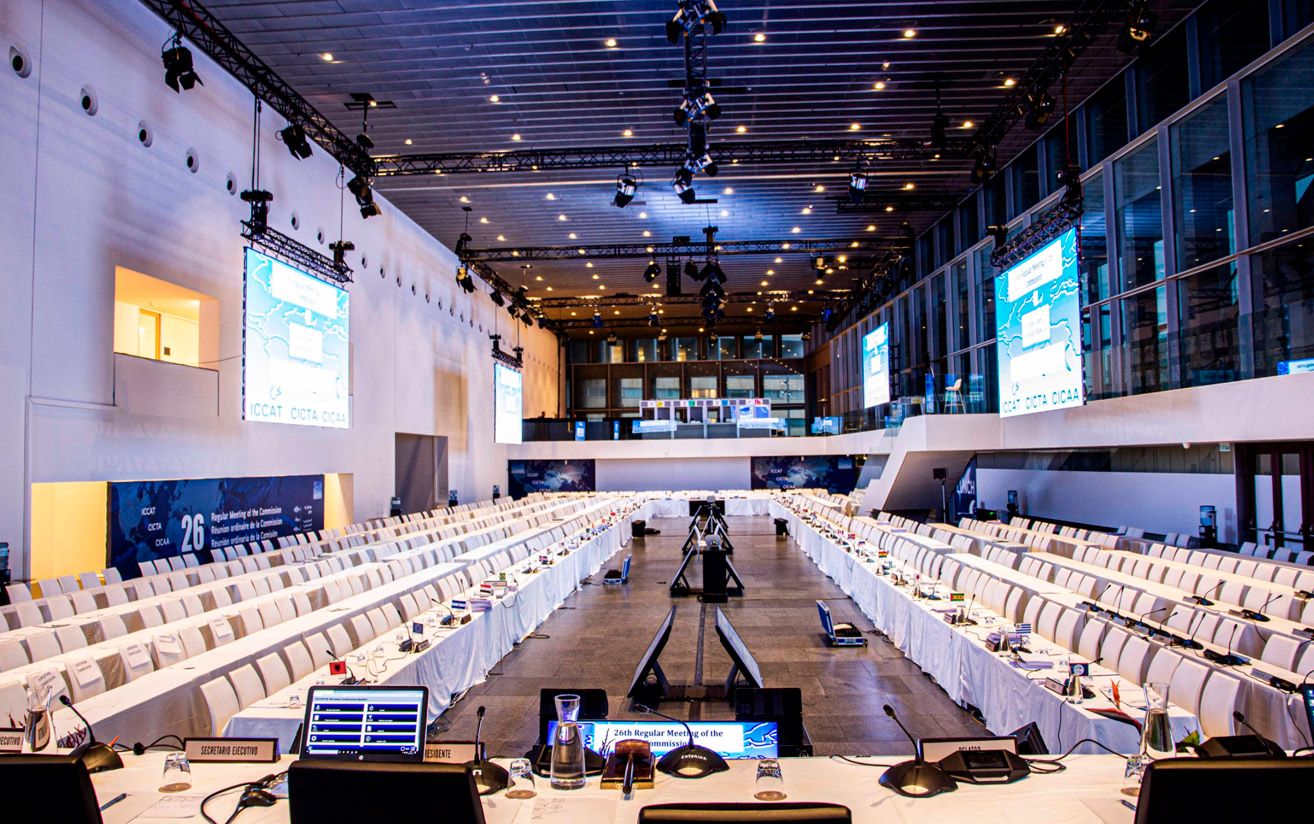
In meetings with lots of speakers, the cleanest option is a microphone at every seat. At the 26th ICCAT Meeting, at the Palma Congress Centre, we installed the Bosch Dicentis conference system with a microphone at every delegate’s seat. That way each contribution reached the room, the interpreting booths and the recording in the same way.
The mix for the stream isn’t quite the same as the one for the room, either. In the room, sound bounces around and the audience is used to it. In a pair of headphones, any background noise or a mic left open too long is very noticeable. Ideally someone listens specifically to the feed going out.
If there are several languages
At international congresses we set up simultaneous interpreting with triple ISO booths, digital transmitters and receivers with up to 32 channels. If there is also a stream, you have to decide which language or languages are broadcast and how they reach the viewer. That decision is best made well ahead, not the day before.
Cameras and vision mixing
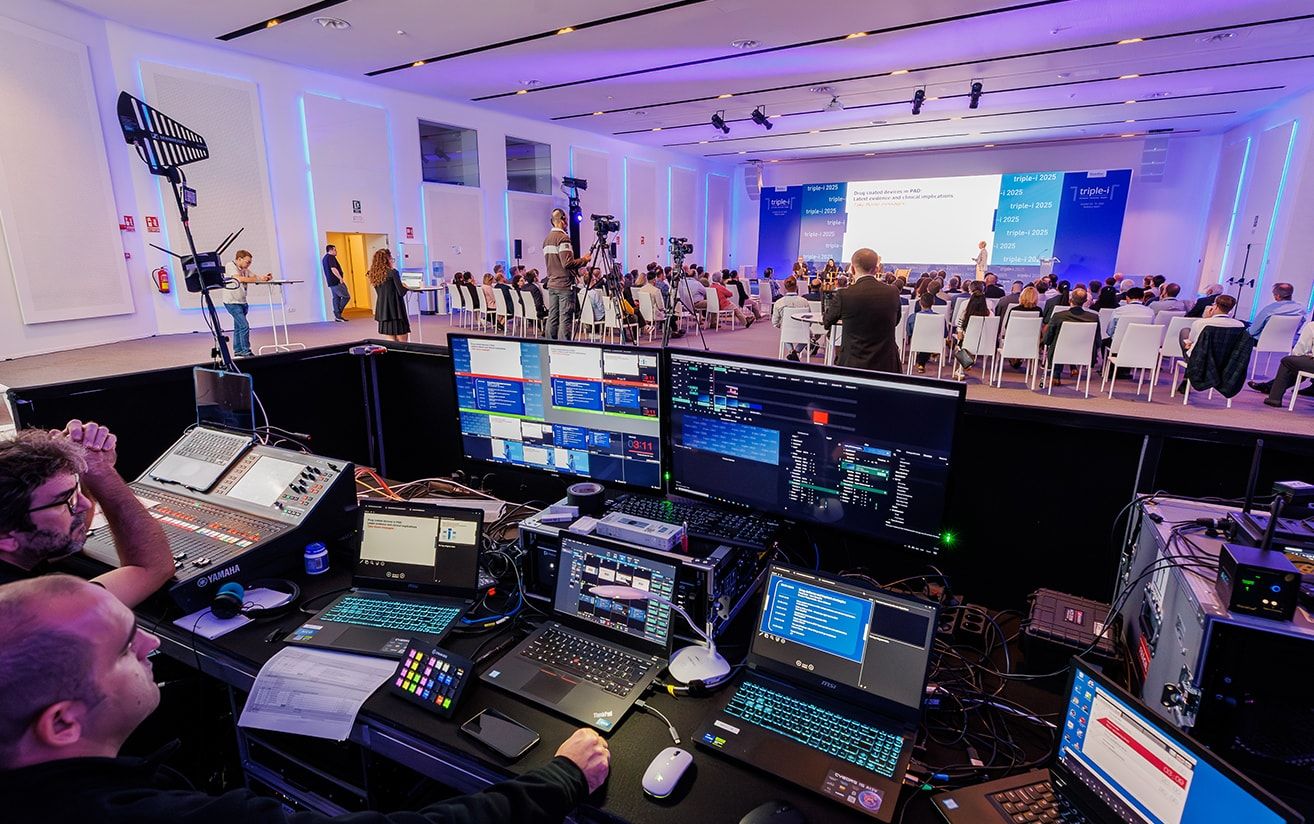
The vision mixing decides what each audience sees and when. At the Triple-i conference at the Meliá Calvià Beach, sound and vision mixing were run from the back of the room, with several preview monitors and a camera on a tripod pointing at the stage. Both what the room saw and what was recorded came from that one position.
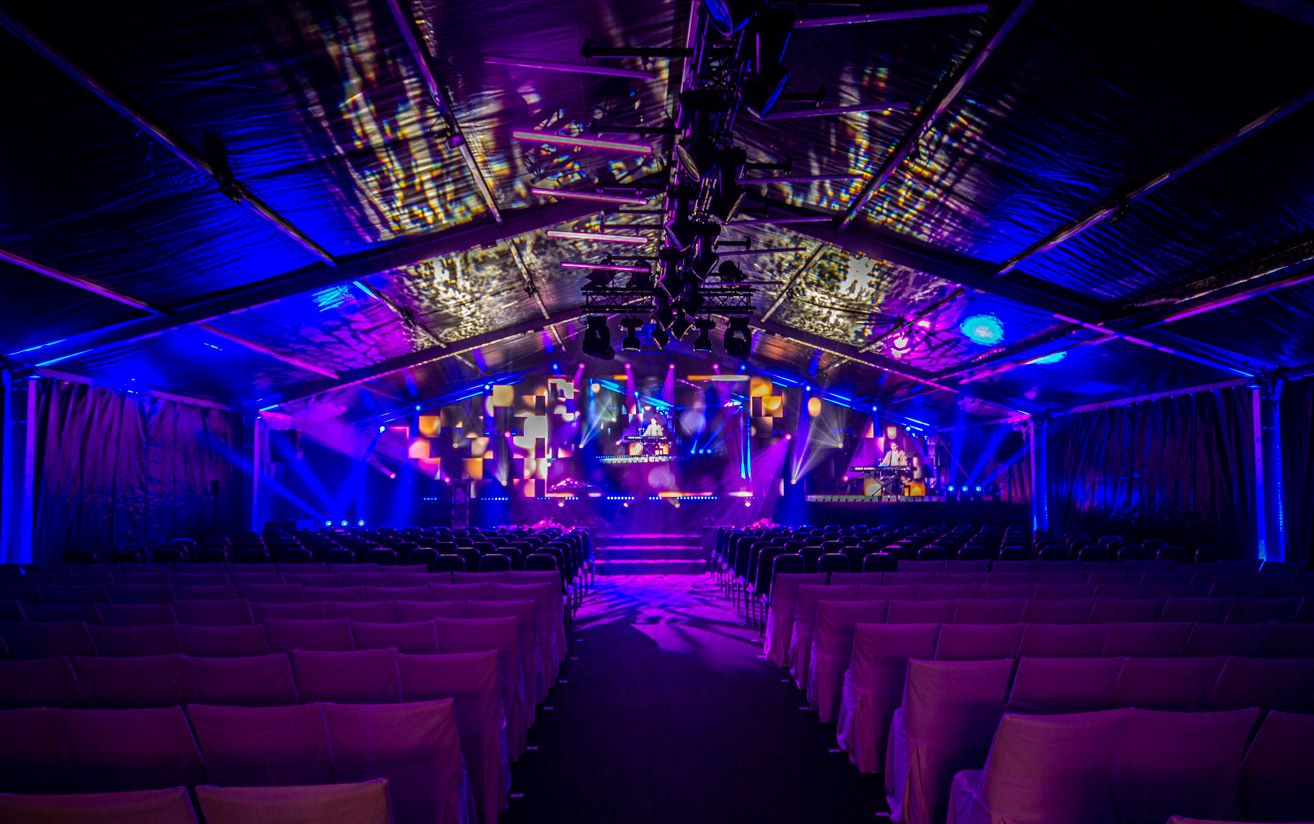
At the Real Club Náutico de Palma Sports Gala there were camera operators in the stalls, and the live feed was shown on the panoramic LED screen on stage. Sound came from a d&b T10 system flown on either side, and technical control was run from inside the marquee itself, behind the drapes.
Robotic cameras are useful when we don’t want operators among the audience. At ICCAT, two robotic cameras followed whoever was speaking without anyone having to move around the room.
At a concert the approach changes. At Formentor Sunset Classics the LED screen flown above the orchestra showed close-ups of the soloists and musicians. Sound was mixed from a digital console out in the audience, and the video signal was controlled from a separate position.
One control position for both audiences
The practical advantage of using the same team that installs the sound, lighting and screens is that everything comes from one technical control position. The image the room sees on screen and the one sent out can be the same signal. If the stage lighting is also designed with camera in mind, the picture improves a great deal at no extra effort.
The connection, before anything else
A stream depends on the venue’s internet connection. Before committing to one, you need to know what line is available, whether it is dedicated to the broadcast or shared with guests, and whether there is a backup if it fails. Many hotels and auditoriums have a good connection, but it should be tested on site rather than relying on the room’s wifi.
You also need to decide where it is broadcast: an open platform, a private link for employees or a website with registration. The set-up changes, and so does who has to manage access.
After the event
Afterwards, there is the footage. We select it, add voiceover, sound and video effects and captions, and edit pieces for publishing or sharing. Sometimes it is the full recording of the talks, sometimes a short highlights video.
It is also worth measuring how it went: how many people watched the stream, what was said on social media and what contacts came out of the event.
Before preparing a hybrid event in Mallorca, be clear on
- How many people will follow remotely, and from where.
- Whether the remote audience will ask questions or just watch.
- Which languages it will be broadcast in.
- Whether you want it live, recorded for later, or both.
There is more information on our page about virtual and hybrid events in Mallorca and under audiovisual technology. If you are planning one, tell us about the format.
Projects mentioned
Shall we talk about your event?